
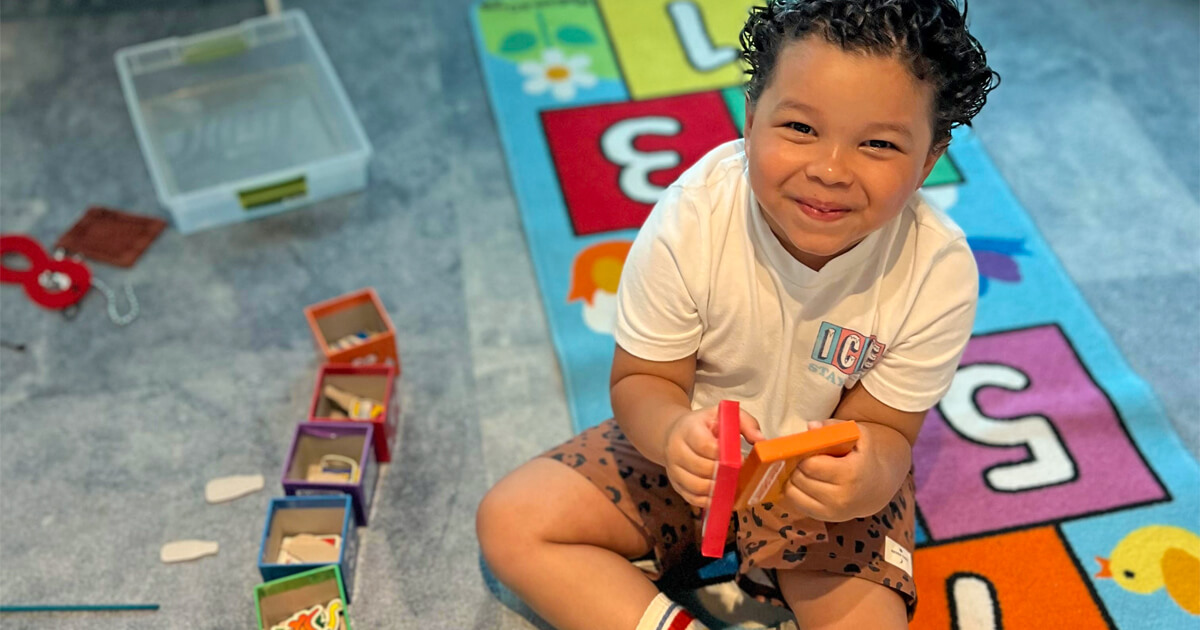
Early learning can happen wherever children have opportunities to explore, ask questions and try something new. During a hotel stay, learning games can bring those opportunities into play, from noticing shapes to inventing stories. At itavi, learning is part of a broader childcare experience that includes play, movement, arts and crafts, and connections to the destination.
For parents, this means time to enjoy their plans while their children have an experience of their own.
What does early learning look like on vacation?
It is easy to associate early learning with lessons, workbooks or getting ready for school. But for young children, learning also happens through the things they naturally want to do: build, imagine, move and explore.
The National Association for the Education of Young Children describes playful learning as a combination of child-directed play, guided play and games. An adult can introduce a question or a challenge while still giving the child room to make choices and discover an answer.
During travel, that might mean noticing the shapes in a building, creating a story about a place the family has visited or experimenting with different ways to build a tower.
The opportunity begins with something that interests the child. A thoughtful question helps take it further.

What makes a game a learning game?
Learning games give children something to explore or work out through play. The materials can be simple. What matters is what the child has the opportunity to do with them.
A set of blocks might become a bridge. A caregiver can ask, “How could we make it wide enough for the boat to fit underneath?” The child has a reason to experiment, adjust the design and try again.
A picture book can become a conversation: “What do you think happens next?” The child has room to imagine an answer and explain their thinking.
The adult’s role is to notice the child’s interest and offer just enough support to extend it. A game should leave room for the child’s ideas, including answers the adult did not expect.
Simple learning games for a hotel stay
These activities are examples parents or caregivers can adapt to a child’s interests and abilities. They can work in a guest room or another suitable space with adult supervision and age-appropriate materials.
Shape detectives
Look for circles, squares and rectangles in pictures or objects around the room. Ask what makes two shapes alike or different.
What children can explore: Shapes, observation and comparison.
Build and test
Use blocks or other suitable building materials to create a bridge or tower. Change the design and see what happens.
What children can explore: Space, balance and problem-solving.
Tell the next part
Take turns adding a sentence to a story inspired by the day’s adventures.
What children can explore: Language, imagination and sequencing.
Copy the rhythm
Make a short clapping pattern for the child to repeat, then let them create one for you.
What children can explore: Patterns, listening and turn-taking.
Draw the destination
Invite the child to draw something they noticed during the trip and tell you about it.
What children can explore: Observation, expression and connections to place.
There is no need to complete every activity or follow a fixed schedule. One game that captures a child’s attention can offer more room for exploration than a series of activities they are ready to leave behind.
Math games for kids can begin with everyday play
Early math includes counting, comparing, recognizing shapes and noticing patterns. These ideas can be explored through games that fit easily into time away.
NAEYC’s guidance for families identifies puzzles, building activities, board games and card games as opportunities to practice mathematical thinking. For example, moving a game piece one space at a time connects counting with action, while a puzzle invites children to consider shapes and how pieces fit together.
Here are three simple math games for kids to try during a hotel stay.
1. Count and move
Choose a small number of movements together: three claps, four steps or two gentle stretches. Count each movement as you do it.
Let the child choose the next movement and number. Keep the activity suited to their ability and the space available.
2. Make a pattern
Start a repeating pattern with drawings, large blocks or clapping sounds. Try circle-square-circle-square or clap-clap-pause.
Ask what comes next, then invite the child to invent a pattern for you to follow.
3. Compare two groups
Make two small groups of age-appropriate objects. Ask which has more, which has fewer or whether they are the same.
For a child who is ready, ask how they could make the groups equal. Give them time to move the objects and test their idea.
These games offer opportunities to explore numbers through something children can see, hear or do. Keep the exchange playful and allow time for mistakes, questions and another attempt.

How should activities change with a child’s needs?
A child’s age is a useful starting point, but it does not tell the whole story. Interests, abilities, energy and comfort in a new setting also matter.
A younger child might enjoy naming shapes with an adult. Another child might want to draw those shapes or use them to design a building. The same idea can offer different levels of challenge.
Travel adds another consideration. A child who enjoyed an active game yesterday may want a quiet story after a busy morning today.
Thoughtful childcare makes room for those changes. The caregiver pays attention to the child in front of them and adjusts the experience accordingly.
How does itavi bring learning into hotel childcare?
The itavi Method brings together play, exercise, learning and arts and crafts, with materials and experiences that highlight the local culture of the destination.
Learning sits alongside the other parts of the experience. A story can introduce a place the family is visiting. A creative activity can give a child a way to respond to something they have seen. Play and movement give them opportunities to participate in different ways.
This is part of itavi’s approach to family hospitality: children deserve a considered experience during their stay, just as parents do.
For parents heading to dinner, attending an event or taking time to themselves, itavi offers childcare with meaningful engagement at its center.
What should parents ask about learning-focused childcare?
Ask what the experience will look like for your child. Useful questions include:
- How are activities adapted to my child’s age and interests?
- What materials will be available?
- How do you respond if my child wants to change activities?
- Is there time for quiet play or rest?
- How can I share information about my child’s needs and routines?
The answers should help you picture the care your child will receive. A thoughtful plan should have enough preparation to offer engaging choices and enough flexibility to follow the child’s needs.
Making room for discovery during time away
A hotel stay can give children new things to notice, new questions to ask and new ideas to explore. Thoughtful care helps turn those moments into opportunities for play and discovery.
At itavi, that is part of the experience we create. Children have time to play, move, learn and make something of their own while parents enjoy more of their time away.
Planning a hotel stay or group event? Contact itavi to discuss thoughtful childcare for your family or guests.
Frequently asked questions
What is early learning in hotel childcare?
Early learning in hotel childcare means offering age-appropriate opportunities to explore ideas through play, conversation, movement and creative activities. It can include noticing patterns, experimenting with building materials or discussing a story.
What learning games work well during travel?
Shape games, storytelling, puzzles, building activities and simple rhythm games can fit into a hotel stay. Choose activities that suit the child’s interests, abilities and energy, as well as the space available.
What are simple math games for kids on vacation?
Try counting movements, making repeating patterns or comparing two groups of objects. These activities introduce mathematical ideas through play and can be adjusted to the child’s level.
How does itavi include learning in childcare?
Learning is one part of the itavi Method, alongside play, exercise and arts and crafts. The approach also incorporates materials and experiences connected to the culture of the travel destination.